Research Core Resources

PKD Research Biomaterials and Cellular Models Core

Director: Darren P. Wallace, PhD

Supported by the PKD Foundation

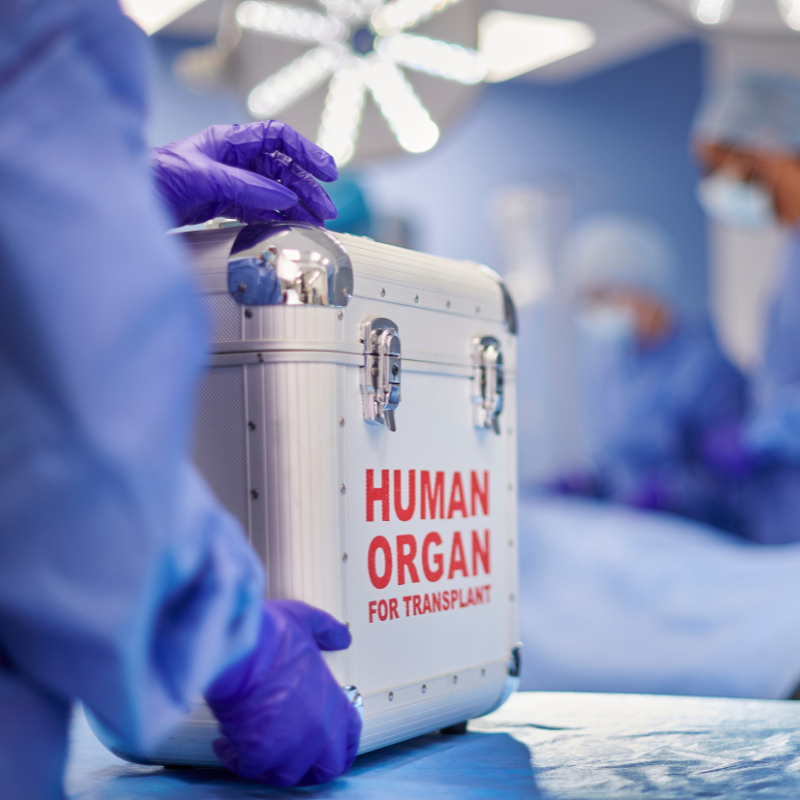
The PKD Research Biomaterials and Cellular Models Core at the University of Kansas Medical Center has a new website (www.kumc.edu/pkdbiomaterials). This Core is a resource for human PKD materials, including fixed and frozen tissues, cyst fluids and primary cells isolated from cysts of human PKD kidneys. The Core also generates biological materials from animal models of PKD and can assist investigators on in vitro models of PKD.

The website has information for investigators about biomaterials available through the Core, as well as information for PKD patients on how to arrange to have their cystic kidneys donated for research with the assistance of the PKD Foundation.

For more information, contact Darren Wallace, Ph.D., Core Director, by telephone (913-588-3889) or email (dwallace@kumc.edu).


ADPKD Mutation Database

Peter Harris, Ph.D., Database Director

Supported by the PKD Foundation

The Autosomal Dominant Polycystic Kidney Disease (ADPKD) Database (PKDB) was established to facilitate the characterization of ADPKD variants in PKD1 and PKD2, the two genes known to have mutations causative of ADPKD.  After the recent launch of version 2.5, the Database is now twice the size of that last version, with a total of 2164 variants listed.  Athena Diagnostics has also contributed mutation information from its clinical testing.  This greatly enlarged resource will provide greater clarity about the significance of the many variants found in the PKD genes.  Information on the PKDB should be used for research purposes only.

More information about the PKDB is available at: http://pkdb.mayo.edu/


Electron Microscopy Core

Vince Gattone, Ph.D., Program Director

Supported by the PKD Foundation

The Electron Microscopy Core for PKD Research utilizes the Electron Microscopy Center of Indiana University School of Medicine, under the direction of an experienced electron microscopist and PKD researcher, Dr. Vincent Gattone. This core is dedicated to facilitate research on polycystic kidney disease and other hepatorenal fibrocystic diseases and is well equipped to handle most electron microscopy needs. Services are provided at a significant discount because the costs are underwritten by the PKD Foundation.

More information about the Electron Microscopy Core for PKD Research is available at
http://www.anatomy.iupui.edu/PKD/index.htm

For access to a research project application form, go to
http://www.anatomy.iupui.edu/PKD/Project%20Application.doc (DOC).


Baltimore PKD Core Center

Supported by NIDDK and the University of Maryland School of Medicine

The Baltimore Polycystic Kidney Disease (PKD) Research and Clinical Core Center is founded on a tradition of innovative PKD research at our Center. The goal of the Center is to promote translational PKD research by providing unique resources and expertise to an international group of investigators.

Biomedical Cores

Core B: Antibody Validation and Vectorology Core

Core C: Mouse Models and Biobank

Core D: Cell Culture and Engineering

Core E: Clinical and Translational Core Resource

Educational Programs

The Center offers educational enrichment programs that strive to encourage critical thought which will yield creative approaches to research questions related to cystic kidney diseases.

Pilot and Feasibility Program

The Pilot and Feasibility Program can support up to three new projects per year. In selecting projects preference is given to innovative lines of inquiry, junior investigators, and new investigators in the PKD field.

Join our Research Base

To become a member of our research base, contact Center Administrator, Karleen Schuhart to submit biosketch.

Center Director: Terry Watnick, M.D.

Center Co-Director: William Guggino, Ph.D.

Center Administrator: Karleen Schuhart

More information about the Baltimore PKD Core Center at http://www.baltimorepkdcenter.org


Knockout Mouse Project

Supported by NIH

NIH has provided funding to establish and support a repository for its Knockout Mouse Project (KOMP). This is part of a $50 million trans-NIH initiative to increase the availability of genetically-altered mice and related materials. The University of California, Davis (UC Davis) and Children’s Hospital Oakland Research Institute (CHORI) in Oakland, California, will collaborate to preserve, protect and make about 8,500 types of knockout mice and related products available to the research community.

More information about the KOMP resources is available at http://www.komp.org/.


Mayo Translational PKD Center

Supported by NIDDK

The Mayo Translational PKD Center focuses on translating basic science research findings into new and better treatments that imporve the care of patients with PKD.

Molecular Genetics and Proteomics

Provides specialized services in support of research and clinical trials related to autosomal dominant polycystic kidney disease (ADPKD) to investigators worldwide. These services include:

   Mutation screening of large typical ADPKD populations

   Mutation screening of cell lines derived from ADPKD patients

   Genetic Screening of atypical PKD families

   Urine collection and fractionation

Director: Peter C. Harris, Ph.D.

http://mayoresearch.mayo.edu/mayo/research/pkd-genetics-proteomics-core/

Model Systems

Develops and makes available PKD model systems and technologies, which are used to evaluate potential therapies and determine the function of PKD proteins. These include:

   C. elegans PKD-targeted services

   Rodent PKD-targeted services

   Zebrafish PKD-targeted Services

Director: Miahael F. Romero,, Ph.D.

http://mayoresearch.mayo.edu/mayo/research/pkd-model-systems-core/

Human Imaging

Provides two imaging services to assess and catalog PKD progression or regression.

Imagain data management: Facilitates the transmission, collection and storage of anonymized imaging data used in translational PKD research, and provides a system that enables PKD researchers around the United States to exchange images.

Image Analysis: of semi-automatic magnetic resonance (MR) and computed tomography (CT) image and volumetric analyses of polycystic kidneys and liver, as well as functional assessment of the kidney and heart (including measurements fo renal blood flow).

Director: Bernard F. King, M.D.

http://mayoresearch.mayo.edu/mayo/research/pkd-human-imaging-core/

More information about the Mayo Translational PKD Center at http://mayoresearch.mayo.edu/polycystic-kidney-desease-center


UAB Hepato/Renal Fibrocystic Disease Core Centers

Core A: ARPKD Clinical and Genetic Resource

Director: Lisa M. Guay-Woodford, MD
Co-Directors: Ludwine Messiaen, PhD (Director, UAB Medical Genomics Lab)

                     Gary Cutter, PhD. (Head, UAB Biometry and Clinical Trials)

Website

Core B: Engineered Mouse Resource

Director: Bradley K. Yoder, PhD
Co-Director: Robert Kesterson, PhD (Director, UAB ESC/Transgenic Core)

Website

Core C: Cellular Physiology Resource

Director: P. Darwin Bell, PhD

Website

Core D: Tissue Characterization and Immunoreagent Resource

Director: Joanne Murphy-Ullrich, PhD (Director, UAB CAMRC)
Co-Directors: Gene P. Seigal, MD, PhD

                     Mary Ann Accavitti-Loper, PhD (Director, UAB ERIC)

Website

Core E: Proteomics Resource

Director: Helen Kim, PhD (Co-Director, UAB Proteomics/Mass Spectrometry Core)
Co-Director: Stephen Barnes, PhD (Co-Director, UAB Proteomics/Mass Spectrometry Core)

Website

More information about the UAB Recessive Kidney Disease Core Centers is available at http://www.rpkdcc.uab.edu/.


UT Southwestern O'Brien Kidney Research Core

Supported by NIH

The overall goal of the Center is to support research in the areas of kidney development and genetics, renal physiology and chronic kidney disease that is conducted at UT Southwestern, neighboring institutions in North Texas and the greater nephrology community in the U.S. and worldwide. The specific aims are to generate new animal models to study the pathogenesis and treatment of human kidney diseases and their cardiovascualr complications, accelerate the clinical application of discoveries made in renal basic science laboratories and provide investigators with spcialized tools and expertise to study kidney development, physiology and pathophysiology. To achieve these aims, the UT Southwestern O'Brien Kidney Research Center comprises four biomendical research cores: animal models, physiology, cell biology and pathology and clinical and translational.

More information about the UT Southwestern O'Brien Kidney Research Core Center at http://www4.utsouthwestern.edu/nephrology/obrien


National Disease Research Interchange (NDRI)

Supported by NIH

For 28 years NDRI has been a major source of human biomaterials for approved research studies, providing scientists with high quality customized biomaterials for use in studies to understand human disease.  Funded by NIH, NDRI is a not-for-profit organization that places around 20,000 normal and diseased tissues each year with researchers in academia and the biomedical and pharmaceutical industries.

More information about NDRI is available by calling 800-222-NDRI (6374) or at www.ndriresource.org.


National Stem Cell Foundation

The National Stem Cell Foundation is a not-for-profit organization that funds clinical trials and research and currently focuses on stem cell kidney transplants, sickle cell disease and rare metabolic disorders.  They just launched their new website which features information about kidney disease and transplants.

More information about the National Stem Cell Foundation is available at nationalstemcellfoundation.org.

Your Organization

2000 Daniel Island Drive, Charleston SC 29492
Phone: 800.443.9441 | Fax: 843.216.6100
info@yourdomain.org

©2013, PKD Foundation ·The PKD Foundation is a 501 (c)(3), 509 (a)(1) public charity.

©2013, PKD Foundation ·The PKD Foundation is a 501 (c)(3), 509 (a)(1) public charity.

Stay Connected

RSSFacebookTwitterYouTubeFlickr


PKDnews

Subscribe to PKDnews, our free monthly newsletter

Subscribe


Partners


©2013, PKD Foundation ·The PKD Foundation is a 501 (c)(3), 509 (a)(1) public charity.