


We are proud to offer both a digital and print version of the patient handbook at no cost to you. We ask that you please consider requesting the digital version as we do incur some costs to print and mail hard copies. We are only able to mail hard copy packets within the United States. The digital version will be sent to you immediately.
There are three versions of the handbook: one for autosomal dominant polycystic kidney disease (ADPKD), which is also available in Spanish, and one for autosomal recessive polycystic kidney disease (ARPKD).
The ADPKD Patient Handbook provides clear, easy-to-understand information about autosomal dominant polycystic kidney disease (ADPKD). It’s designed for people living with ADPKD, those who may be at risk because a parent has the disease, and family members or friends who want to learn more. (This handbook is not intended for those affected by autosomal recessive polycystic kidney disease, or ARPKD.)
- ADPKD is the more common form of polycystic kidney disease, occurring in approximately 1 in 500 to 1 in 2,000 people.
- It's the fourth leading cause of kidney failure.
- Because parents have a 50% chance of passing the disease to their children, ADPKD often affects several members of the same family.
NEW! When you order the ADPKD Patient Handbook, you’ll also receive a digital link to the companion guide — Understanding KDIGO 2025 ADPKD Clinical Guideline: A Plain Language Guide.
This guide was created by the PKD Foundation to help patients, care partners, and families understand the latest medical recommendations for ADPKD. It summarizes the key points from the KDIGO 2025 Clinical Practice Guideline in plain language and supports shared decision-making with your healthcare team.
The purpose of this handbook is to provide information about autosomal recessive polycystic kidney disease (ARPKD) and congenital hepatic fibrosis (CHF). It will be useful to children and families who have been diagnosed with ARPKD/CHF, as well as family members, caregivers and health professionals. It is not intended for those with autosomal dominant polycystic kidney disease (ADPKD).
- ARPKD is a rare form of the disease that occurs in 1 in 20,000 children worldwide.
- Previously thought to be a fatal condition, the prognosis for children with ARPKD has improved dramatically.
El propósito de este manual es proporcionar información sobre la enfermedad renal poliquística autosómica dominante (ERPAD). Será un documento útil para aquellas personas que tienen la enfermedad, para las que tienen riesgo de tenerla debido a un progenitor afectado, así como para los familiares y amigos involucrados. No está dirigido a los pacientes con enfermedad renal poliquística autosómica recesiva (ERPAR). Para los pacientes con esta enfermedad, hay un manual disponible en pkdcure.org. En lo sucesivo, nos referiremos a la ERPAD simplemente como ERP.

Thank you for your interest in Pediatric to Adult Care: A Family Resource for Navigating PKD Care Transition. For individuals growing up with polycystic kidney disease (PKD), transitioning from pediatric to adult healthcare is an important milestone that can bring new responsibilities, opportunities, and questions. This guide is designed to help patients and families navigate the transition process with confidence while supporting greater independence, self-advocacy, and continuity of care. Whether you are a young person preparing to take a more active role in managing your health or a parent/caregiver supporting this transition, this resource provides practical information, tools, and guidance to help you prepare for adult healthcare. Inside, you'll find resources to build self-management skills, understand changing healthcare needs, communicate effectively with healthcare providers, and ensure a smooth and successful transition to adult care. We hope you find this guide helpful as you plan for the next stage of your healthcare journey and continue receiving the care and support needed to thrive while living with PKD.
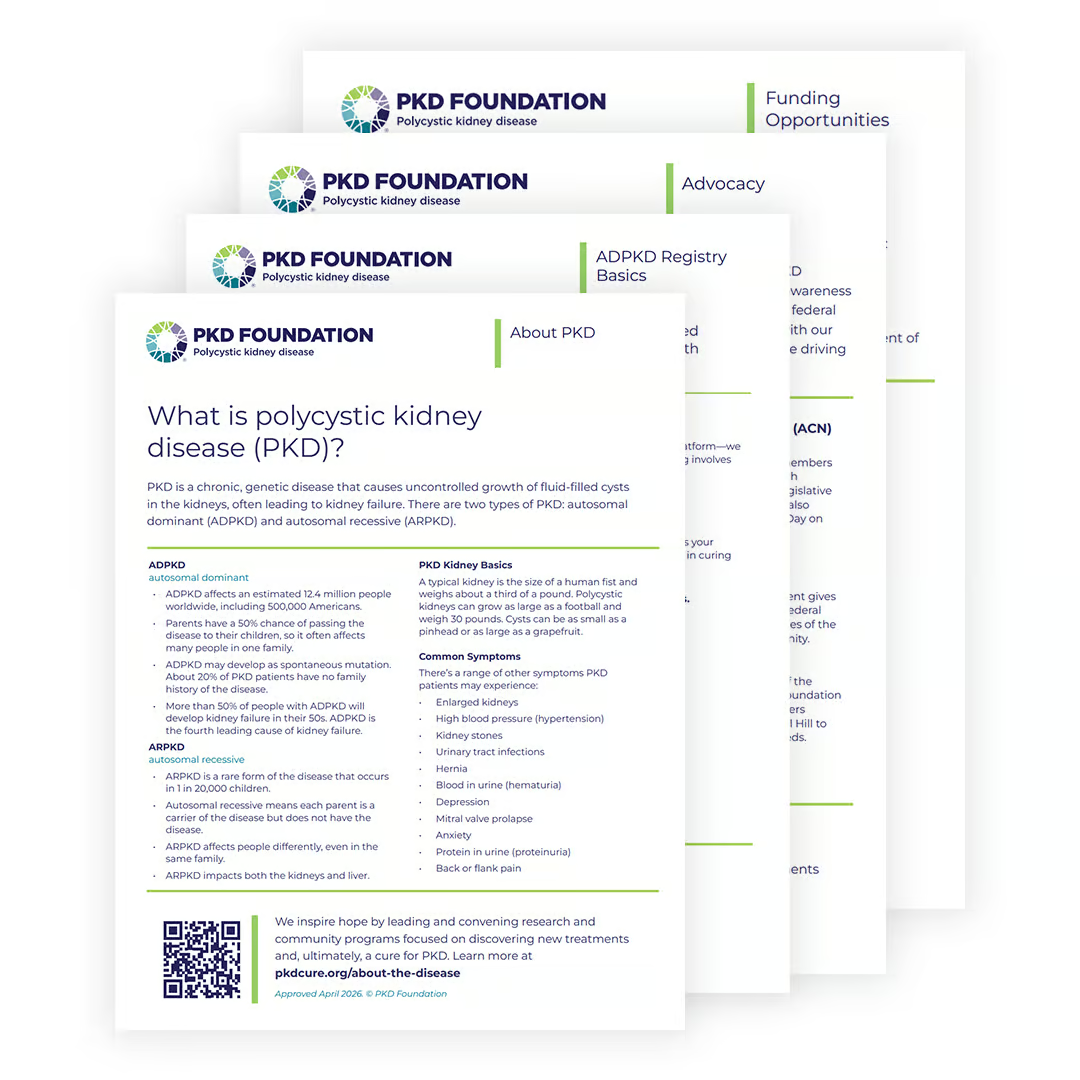
Download free patient education handouts that you can print right in your home or office. Some topics include:
- About PKD
- When to Seek Care for a Ruptured Cyst
- What to do When Your Child Receives a PKD Diagnosis
- Your Guide to Genetic Testing
- ADPKD Registry
- Get Involved (with the PKD Foundation)
- And more!